
Professional Fixtures and Jigs Manufacturing
Custom fixtures and jigs designed to enhance manufacturing efficiency, ensure consistent quality, and reduce production costs. Our precision tooling solutions support various industries and applications.
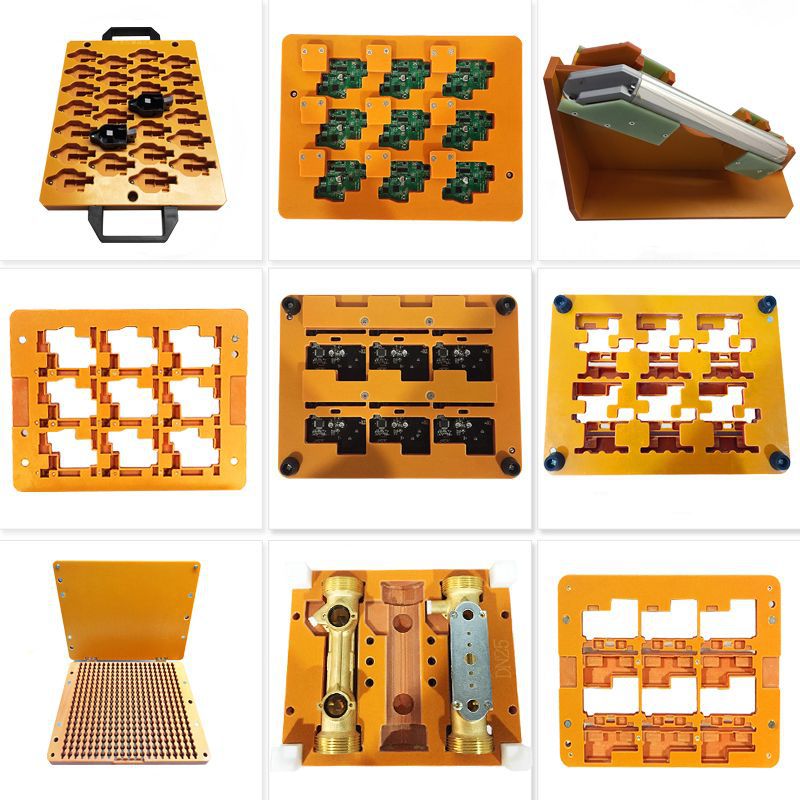
Fixtures & Jigs Capabilities
Fixture Types
Custom fixtures for various manufacturing processes
- •Assembly fixtures
- •Welding fixtures
- •Inspection fixtures
- •Machining fixtures
Jig Types
Specialized jigs for precision operations
- •Drilling jigs
- •Boring jigs
- •Welding jigs
- •Assembly jigs
Materials
High-quality materials for durability
- •Aluminum for lightweight
- •Steel for strength
- •Plastic for cost-effective
- •Composite materials
Tolerance
Precision tolerances for accuracy
- •Standard: ±0.1mm
- •High precision: ±0.05mm
- •Custom tolerances available
- •Geometric tolerancing
Design & Manufacturing Process
Requirements Analysis
Understanding your specific manufacturing needs and constraints
Design & Engineering
Creating detailed CAD models and engineering drawings
Prototype Development
Building and testing prototype fixtures or jigs
Production Manufacturing
Precision manufacturing using advanced CNC technology
Quality Assurance
Rigorous testing and validation before delivery
What fixtures & jigs are—and when to buy custom
Fixtures locate and clamp parts for machining, welding, or inspection; jigs guide tools (drill jigs, etc.). Custom hard tooling pays when volume or accuracy beats soft jaws and layout every time.
Choose custom fixtures when you repeat the same part, need poke-yoke, or must hit GD&T that freehand setups miss.
Partsproto designs and machines fixtures in China for overseas plants and contract manufacturers—send the part print and the operation the fixture supports.
- → Repeating CNC or assembly ops needing consistent location
- → Multi-part nests or family fixtures for a product line
- → Inspection fixtures / CMM holding for CTQ programs
- → Weld or glue fixtures with clamp sequencing notes
DFM tips for fixtures & jigs
- •Tell us the machine table, spindle clearance, and tombstone/grid pattern—fixture envelope must fit the cell.
- •Define primary datums on the part that the fixture will pick up; vague hold notes drive cost.
- •Call clamp force limits on thin walls and cosmetic faces.
- •If you need quick changeovers, specify side-loading or zero-point receivers early.
- •Share cycle time targets—overbuilt steel vs aluminum plate changes price and wear life.
Inspection & QC on fixtures
- ✓Critical locator positions checked to fixture print.
- ✓Clamp function and interference check with a sample part when provided.
- ✓Hardness / surface notes on wear pads when specified.
- ✓Photo documentation of assembled fixture before export ship.
- ✓Optional CMM on locator pins for high-accuracy nests.
Lead time & batch sizing
Simple aluminum plate fixtures often land in about 2–4 weeks after design approval; complex multi-station steel fixtures take longer. Prototype soft fixtures can be faster for prove-out. We quote design hours + machining separately when concept is open. Export crating included for overseas buyers.
Frequently Asked Questions
Do you design fixtures from scratch?
Yes—from concept through detailed prints—or we machine to your fixture CAD. Tell us the machine envelope and datums.
Aluminum or steel fixtures?
Aluminum for lighter changeovers; steel or hardened wear pads for high-volume production. Mixed builds are common.
Can fixtures ship overseas assembled?
Yes. Partsproto crates assembled fixtures from China with photos and locator checks when ordered.
What are jigs and fixtures?
Jigs and fixtures are specialized tools used in manufacturing to hold, support, and guide workpieces during machining, assembly, or inspection operations. Jigs guide cutting tools and ensure consistent positioning, while fixtures hold workpieces securely in place during manufacturing processes.
What are jigs used for?
Jigs are primarily used to guide cutting tools and ensure consistent positioning during machining operations. They help maintain accuracy, reduce setup time, and enable less-skilled operators to produce precise parts. Common applications include drilling, boring, reaming, and tapping operations.
What are types of fixtures?
Common types of fixtures include assembly fixtures (for joining components), welding fixtures (for positioning parts during welding), inspection fixtures (for quality control), machining fixtures (for holding workpieces during cutting), and testing fixtures (for functional testing). Each type is designed for specific manufacturing processes.
What are the types of jigs?
Main types of jigs include drilling jigs (for hole-making operations), boring jigs (for enlarging holes), welding jigs (for positioning during welding), assembly jigs (for component assembly), and template jigs (for marking and layout). Each type serves specific manufacturing needs and requirements.
What qualifies as a fixture?
A fixture is a manufacturing tool that holds and supports a workpiece in a fixed position during machining, assembly, or inspection operations. It must provide secure clamping, maintain dimensional accuracy, withstand cutting forces, and be designed for the specific workpiece geometry and manufacturing process.
How is a jig different from a fixture?
The main difference is that jigs guide cutting tools and ensure tool positioning, while fixtures only hold and support workpieces. Jigs typically have bushings or guides for tools, while fixtures focus on secure workpiece clamping. Jigs are more complex as they control both workpiece and tool positioning.
Request a fixture / jig quote
Send the part print, the operation (mill/weld/inspect), machine envelope, and qty of fixtures needed.
Get Instant QuoteReady to Get Started?
Contact us today to discuss your fixtures and jigs requirements