
Insert Molding Services
Mold thermoplastic or LSR around metal inserts—threaded fasteners, bushings, pins, and stamped contacts—so you get one assembly-ready part. Partsproto quotes aluminum tooling and export lots from China for overseas buyers.
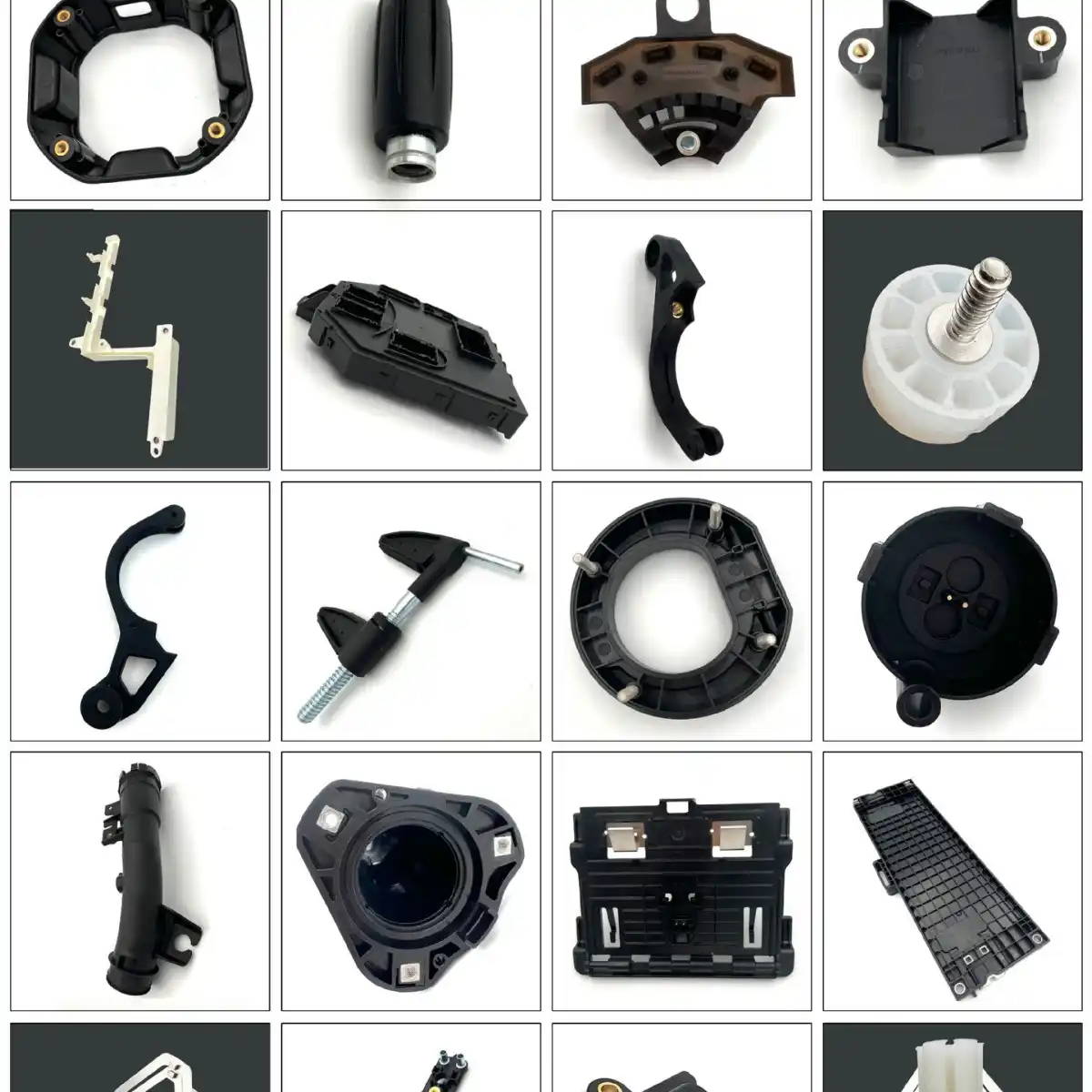
Insert molding places a preformed insert (usually metal) into the mold cavity, then injects plastic or LSR so the polymer locks around it. Unlike overmolding’s two plastic shots, the insert is typically made elsewhere and loaded each cycle. Choose insert molding when you need durable threads, wear surfaces, electrical contacts, or structural metal inside a plastic body—without secondary heat-staking or press-in that can loosen in the field. Partsproto runs insert programs as a China export supplier: clear DFM, insert sourcing or customer-supplied inserts, and packing for overseas shipment.
What insert molding is—and when to choose it
- →You need metal threads or conductivity inside a plastic part
- →Press-in inserts have failed pull-out or torque tests
- →Volume is proto to mid-volume where aluminum tools make sense
- →You want fewer secondary assembly steps in your line
Insert molding capabilities
Guidelines that keep inserts seated, plastic filled, and cosmetics acceptable—share insert drawings with the plastic CAD.
Specifications
Maximum Part Size
US: 18.9 in. x 29.6 in. x 8 in.
Metric: 480mm x 751.8mm x 203.2mm
Volume
US: 59 cu. in.
Metric: 966,837 cu. mm
Depth
US: 4 in. from parting line
Metric: 101mm from parting line
Up to 8 in. (203.2mm) if the parting line can pass through middle of part
Projected Mold Area
US: Plastic: 175 sq in. / Silicone: 48 sq. in.
Metric: Plastic: 112,903 sq. mm / Silicone: 30,958 sq. mm
Tolerances
Minimum Volume
0.025 cu. in. / 40.98 cu. mm
Machining Tolerance
±0.003 in. (0.08mm)
With substrate molds
Resin Tolerance
Thermoplastic: 0.002 in./in. (0.002mm/mm)
LSR: 0.025 in./in. (0.025mm/mm)
Insert molding process workflow
Preformed inserts are loaded into the tool; plastic or LSR is injected to encapsulate them. Cycle time includes careful placement—automation is quoted when volumes justify it.
DFM & insert plan
Confirm plastic thickness around insert, gate location, and whether inserts are customer-supplied or we source.
Tooling
Aluminum mold with insert nests / locators; verify shutoffs so flash does not bury threads.
Insert prep
Clean, orient, and (if needed) preheat inserts; verify lot traceability.
Molding
Load insert each cycle; inject; hold; eject without pulling the insert.
QC & pack
Position, flash, pull-out/torque sample; export pack with certs.
Threaded inserts
Brass/steel inserts for repeated assembly torque—better retention than many post-mold press-ins
Bushings & sleeves
Wear and alignment surfaces molded-in for shafts and fasteners
Stamped / machined metals
Contacts, plates, and pins encapsulated for connectors and structural hybrids
Common insert types / suppliers we work with
Resins & insert metals
Match resin shrinkage and temperature to insert CTE—and tell us if the part sees autoclave, solvents, or outdoor UV.
Thermoplastics
- • ABS, PC, PC/ABS — housings and covers
- • PA6/PA66 (nylon) — structural & under-hood adjacent
- • POM, PP, PBT — wear and electrical
- • Filled grades (GF) when stiffness is required
Metal inserts
- • Brass threaded inserts (common)
- • Steel / stainless bushings and studs
- • Aluminum inserts (watch CTE vs resin)
- • Custom CNC or stamped contacts
LSR option
- • Liquid silicone over metal frames for seals and soft-touch hybrids
- • Durometer selected for compression set needs
Quality assurance
Design analysis
DFM on plastic thickness, gate, and insert retention before steel/aluminum is cut
Insert placement verification
Orientation and seating checks each setup and on patrol samples
Dimensional inspection
Critical plastic dims and insert true position as agreed
Pull-out / torque testing
Sample retention strength when the RFQ requires it
Common applications
Automotive & mobility
- •Connector bodies
- •Sensor housings with inserts
- •Mounting brackets
- •Interior fasteners
Electronics
- •Board mounts
- •Shielded housings
- •I/O connectors
- •Heat-spreader hybrids
Medical-adjacent devices
- •Device housings
- •Instrument handles with metal cores
- •Equipment mounts
- •Fluid connectors
Industrial
- •Machine guards with fasteners
- •Structural plastic+metal parts
- •Fixture components
- •Enclosure hardware
Design resources
Wall & gate around inserts
Keep plastic support around knurls; gate to avoid insert shift.
Threaded insert selection
Match insert series to plastic and assembly torque.
Material pairing
Resin temp and shrinkage vs insert metal CTE.
DFM tips for insert molding
- •Leave enough plastic around the insert knurl/undercut—starved walls crack or let inserts spin under torque.
- •Keep insert height consistent; proud metal that hits the cavity steel causes tool damage and flash.
- •Gate away from thin sections next to inserts so flow does not displace the insert before freeze.
- •Specify pull-out and torque requirements on the print so we can design retention features, not guess.
- •For customer-supplied inserts, send a drawing with orientation marks and plating notes (oil or wax residue ruins bond).
- •If threads must stay clean, plan shutoffs or masks—do not rely on scraping flash after molding.
Inspection & QC
- ✓Insert presence, orientation, and seating depth checks.
- ✓Flash inspection at insert shutoffs and thread mouths.
- ✓Dimensional CTQs on plastic features and overall envelope.
- ✓Pull-out or torque sampling when specified on the PO.
- ✓Material certs for resin lots and insert lots when ordered.
Lead time & batch sizing
Aluminum insert tools for straightforward parts often support first shots in roughly 2–4 weeks after DFM freeze and insert availability—complex multi-insert tools take longer. Once the tool is proven, repeating lots depend on insert supply and resin color. Prototypes and pilots (tens to low thousands) are common on aluminum; high annual volume may justify steel. Ask for tool + piece-price at pilot and production breaks. Partsproto ships export cartons with insert lot traceability when you require it.
Insert molding FAQ for buyers
Insert molding vs press-in inserts after molding?
Molded-in inserts usually give higher retention and better alignment for repeating torque. Press-in is fine for light duty or late design changes. Share torque/pull-out targets and we will recommend.
Can you source inserts or must I supply them?
Either. Standard threaded inserts we can source; custom CNC/stamped inserts often ship from you or a nominated vendor. Lead time follows the slower of tool vs insert supply.
Will aluminum tooling work for my volume?
Aluminum is ideal for prototypes, pilots, and many mid-volume export programs. Very high annual volumes or abrasive resins may need steel—we will say when.
What do you need for a quote?
Plastic CAD + insert CAD/drawings, resin preference, insert material, quantities, cosmetic class, and any pull-out/torque specs. Photos of a competitor part help if drawings are incomplete.
Do you mold LSR around metal inserts?
Yes on suitable geometries. LSR insert programs need different shutoffs and handling—call that out so we do not quote thermoplastic assumptions.
Are you a US domestic molder?
No. Partsproto is a China-based export manufacturing supplier serving overseas buyers with tooling, molding, QC, and international shipping.
Request an insert molding quote
Send plastic + insert files, resin, and quantities. Partsproto returns tooling options, piece price, DFM notes, and an export lead-time estimate.