
Liquid Silicone Rubber (LSR) Molding
Mold flexible, heat-resistant, biocompatible-capable silicone parts—seals, gaskets, buttons, masks, and soft-touch components. Partsproto runs LSR on dedicated equipment with aluminum tooling and ships export lots from China.
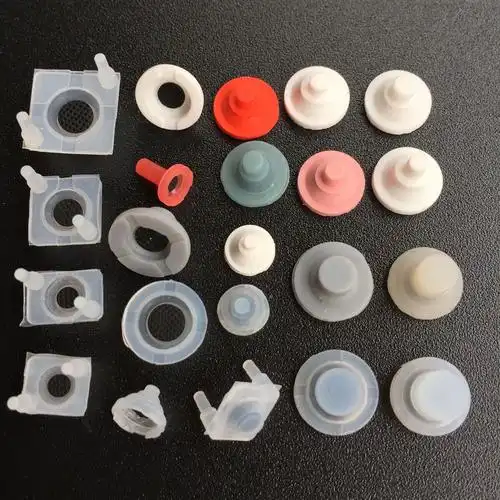
What LSR molding is—and when to choose it
Liquid silicone rubber is a two-part platinum-cured elastomer injected into a heated mold, then cured into a flexible part. Compared with thermoplastic elastomers, LSR handles wider temperatures, many sterilization methods, and excellent compression set for seals. Choose LSR when you need lasting elasticity, biocompatibility grades, transparency, or fuel/oil-resistant fluorosilicone—not when a cheap TPE grip would do. We quote as a China export supplier: durometer, grade, flash class, and post-cure needs called out up front.
- →Seals and gaskets that must recover after compression
- →Medical-adjacent or baby-care soft parts needing clean grades
- →High/low temperature flex where TPE hardens or melts
- →Optical or translucent silicone components
LSR molding capabilities
Envelope and tolerance guidance for aluminum LSR tools—deep parts and large projected areas need early review.
Specifications
Size Limit
US: 12 in. x 8 in. x 4 in.
Metric: 304.88mm x 203.2mm x 101.6mm
Volume
US: 13.3 cu. in.
Metric: 217,948 cu. mm
Depth
US: No greater than 2 in. from any parting line
Metric: No greater than 50.88mm from any parting line
Projected Mold Area
US: 48 sq. in.
Metric: 30,968 sq. mm
Tolerances
Machining Tolerance
±0.003 in. (0.08mm)
Linear Tolerance
±0.025 in./in. (0.025mm/mm)
LSR material options
Pick durometer and grade for sealing force, tear strength, and regulatory needs—tell us sterilization and media exposure.
Durometer grades:
Standard silicone
Grades
- • Elastic recovery
- • Wide temperature range
- • General industrial seals
Medical / clean grades
- • FDA food-contact capable grades available
- • USP Class VI options by grade
- • Sterilization paths (EtO, gamma, autoclave—confirm per grade)
Optical grade
- • High transparency
- • Low yellowing
- • Light pipes & lenses (silicone)
Fluorosilicone
- • Fuel / oil resistance
- • Automotive fluid seals
- • Quoted for specialty duty
LSR molding workflow
Heated aluminum tools, metered A/B silicone, cure in cavity, careful demold—flash class depends on shutoff design.
DFM & grade pick
Confirm durometer, undercuts, tear risk, and whether post-cure is required.
Tooling
CNC aluminum LSR mold with vents and cold-runner or valve strategy as quoted.
Material prep
Meter mix A/B; colorant if specified; lot traceability for export.
Injection & cure
Inject into hot tool; cure to print; demold without tearing thin sections.
Post-ops & QC
Deflash, post-cure if needed, inspect, pack for overseas shipment.
LSR applications
Where buyers typically RFQ LSR with Partsproto:
Medical-adjacent & life science
- •Seals & septa
- •Masks & soft interfaces
- •Valves & diaphragms
- •Baby-care soft parts
Automotive & mobility
- •Connector seals
- •Dampers
- •Keypads
- •Sensor boots
Consumer electronics
- •Waterproof gaskets
- •Buttons
- •Protective bumpers
- •Cable glands
Industrial equipment
- •O-ring alternatives
- •Gaskets
- •Shock pads
- •Protective covers
Quality control
Soft parts need different checks than rigid plastics—durometer and flash class matter as much as caliper dims.
DFM review
Shutoff, undercut, and tear-risk analysis before tool cut
Process window
Documented shot size, temps, and cure time for repeating lots
Dimensional & flash
CTQ dims plus flash class agreement
First article
FA with photos; optional FAIR for regulated buyers
Surface finish options
PM-F0
Non-cosmetic, finish to factory discretion
PM-F1
Low-cosmetic, most toolmarks removed
PM-F2
Non-cosmetic, EDM permissible
SPI-C1
600 grit stone, 10-12 Ra
PM-T1
SPI-C1 + light bead blast
PM-T2
SPI-C1 + medium bead blast
SPI-B1
600 grit paper, 2-3 Ra
SPI-A2
Grade #2 diamond buff, 1-2 Ra
DFM tips for LSR parts
- •Design intentional shutoffs; LSR flashes easily into tiny gaps—do not expect razor flash-free edges without good tool design.
- •Undercuts are possible with careful tooling but raise cost—simplify if the seal allows.
- •Keep section thickness more uniform than you would in rigid plastic; thick sections cure slower and can over-crosslink at the skin.
- •Call out compression set and media (oil, steam, IPA). Grade choice matters more than geometry tweaks alone.
- •For optical parts, specify clarity class and gate vestige limits early.
- •If the part mates to plastic or metal, share the groove drawing—we check squeeze and fill percentage.
Inspection & QC on LSR
- ✓Durometer verification on material lots when specified.
- ✓Dimensional CTQs with soft-part measurement methods (fixtured, non-crushing).
- ✓Flash and tear inspection on sealing edges.
- ✓Visual for contamination / bubbles on optical or medical-adjacent parts.
- ✓Material certs and, when ordered, post-cure records.
Lead time & batch sizing
Aluminum LSR tools for simple seals often support first articles in a few weeks after DFM freeze; complex undercuts and multi-cavity tools take longer. Post-cure and secondary deflash add days. Prototypes and pilots are common; multi-cavity is quoted when annual volume justifies it. Request breaks at 50 / 500 / 5,000 so export programs can stage validation builds. Partsproto packs LSR to protect soft edges in international freight.
LSR molding FAQ for buyers
LSR vs TPE—how do I choose?
LSR for temperature extremes, many sterilization paths, and long-term compression set. TPE for lower cost grips when environment is mild. Share duty cycle and we will recommend.
What durometer should I pick?
Seals often land mid-range (40–60A); buttons may be softer; structural soft parts harder. If unsure, tell us squeeze and feel targets—we suggest a starting grade.
Can LSR be clear / optical?
Yes with optical grades and careful gating. Expect stricter cosmetic criteria and possibly different tooling polish.
Do you support medical device production?
We support medical-adjacent soft parts with appropriate grades and documentation. Fully regulated device manufacturing requirements must be scoped on the RFQ—do not assume blanket claims.
What do you need for a quote?
CAD/PDF, durometer target, grade notes, flash class, quantity breaks, and environment (temp, media, sterilization). A sectioned seal drawing helps.
Is Partsproto a US domestic LSR molder?
No. We are a China-based export manufacturer serving overseas buyers with tooling, molding, QC, and international shipping.
Request an LSR molding quote
Send CAD, durometer, and quantities. Partsproto returns tooling approach, piece price, DFM notes, and export lead time.