
5-Axis CNC Machining Services
Complex Geometry in Fewer Setups for Export Programs
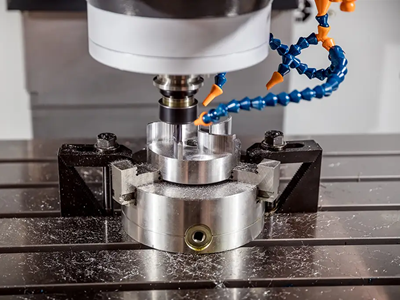
Partsproto machines impellers, housings, orthopedic-adjacent shapes, and multi-face prismatic parts on 5-axis CNC. Simultaneous and 3+2 strategies cut setups, improve surface access, and keep GD&T relationships intact—quoted from China for overseas buyers.
- • Contoured surfaces and undercuts in continuous motion
- • Typical work envelopes for mid-size housings and blades
- • High-speed spindles for aluminum and finishing passes
- • Multi-face machining with rigid tool orientation
- • Deep cavities and compound-angle holes
- • Efficient for prismatic parts that need many angles
Technical capabilities (typical)
Motion & accuracy
- Modes
- Simultaneous 5-axis and 3+2 positional
- Positioning
- Often ±0.01 mm or better when process-fit; CTQs quoted per print
- Rotary reach
- A/B or A/C configurations depending on machine
Envelope & spindle
- Part size
- From small instruments to mid-size housings (confirm XYZ per job)
- Spindle
- High-speed finishing for aluminum; rigid roughing for steels/Ti
- Tooling
- Large magazines, probing, length/radius compensation
CAM & control
- Programming
- CAM with collision check and toolpath simulation
- Strategies
- Trochoidal roughing, geodesic finishing, rest machining
- Verification
- On-machine probing when justified for FA and offsets
Where 5-axis pays off
Aerospace & drones
Structural brackets, housings, and flow components with multi-face GD&T.
Typical parts
- • Complex housings
- • Impellers / rotors
- • Lightweight brackets
- • Fixture plates with compound holes
Common materials
Aluminum alloys, Titanium, Stainless / Ni alloys (quoted)
Medical & life science
Instruments and device components with organic forms and fine finishes.
Typical parts
- • Instrument bodies
- • Custom implants (non-regulated statement)
- • Manifolds
- • Surgical tool components
Common materials
Ti6Al4V, 17-4PH / 316L, PEEK
Industrial & automotive
Prototype tooling details, pump housings, and performance parts.
Typical parts
- • Pump / valve bodies
- • Racing prototypes
- • Sensor housings
- • Mold inserts (selected)
Common materials
Aluminum, Tool steels, Engineering plastics
Technical advantages for buyers
Fewer setups, cleaner GD&T
Machine more faces in one fixture family—reduce stack-up between operations
- • Fewer fixture qualifications
- • Better positional relationships
- • Shorter tools in deep areas
- • Less handling damage risk
Access to complex geometry
Undercuts, compound holes, and sculptured surfaces that 3-axis cannot reach efficiently
- • Continuous surface finishing
- • Angled ports without sine plates
- • Improved scallop control
- • Viable undercut strategies
Export-ready process control
Quoted with inspection plan and realistic China-to-destination lead time
- • FAIR / CMM options
- • Material certs on request
- • Photo reports for receiving
- • Break-point pricing for pilots
Quality assurance
Inspection matched to geometry risk—not a generic checklist.
Certifications
ISO 9001:2015
Quality management
Quality Processes
In-process
- • On-machine probing
- • Tool length/radius set
- • First-off dimensional checks
Final verification
- • CMM for GD&T frames
- • Surface roughness sampling
- • Optical / scan when useful
Documentation
- • FAIR on request
- • Material mill certs
- • Process photos for export receiving
What 5-axis machining is—and when to choose it
5-axis CNC moves the tool (or table) so the cutter can approach the part from nearly any direction. Simultaneous 5-axis keeps all axes live for smooth surfaces; 3+2 locks two rotary axes and mills like a stiff 3-axis at an angle.
Choose 5-axis when you have compound angles, deep pockets that need short tools, organic surfaces, or many faces that would otherwise mean five or more fixtures on a 3-axis mill.
Do not default to 5-axis for flat plates and simple blocks—3-axis is usually cheaper. We will say so on the quote. Partsproto is a China export machining supplier; we optimize for landed cost and schedule, not for selling the fanciest machine mode.
- → Impellers, blisks-lite, or sculptured surfaces that need continuous tool tilt
- → Housings with ports on multiple faces and tight positional GD&T
- → Undercuts / deep cavities where short tools improve finish and accuracy
- → Prototype-to-production parts where one fixture family reduces risk
5-axis workflow
RFQ & DFM
Review CAD for undercuts, thin walls, tool reach, and whether 3+2 is enough vs full simultaneous.
Fixture & CAM
Design soft jaws/tombstone strategy; simulate toolpaths and collisions before metal.
First article
Probe and CMM critical GD&T; freeze offsets and tool list.
Production
Run lot with tool-life management; secondary finish ops if ordered.
Inspect & export pack
CTQ report, certs, protective packing for overseas freight.
DFM tips for 5-axis parts
- •If 3+2 can hit every face, say so—or accept our recommendation; simultaneous costs more only when surfaces need it.
- •Add tool-access fillets in deep pockets; sharp internal corners force tiny tools and long cycle times.
- •Call out primary datums clearly. Multi-face parts without a datum story create expensive guessing.
- •For impellers and blades, specify balance or runout needs early so we plan stock and finishing strategy.
- •Titanium and Inconel: give realistic lot sizes—tooling cost dominates one-offs; pilots of 5–20 often make more sense.
- •Avoid over-specifying Ra 0.2 everywhere; put fine finish only where sealing or fatigue requires it.
Inspection & QC on 5-axis jobs
- ✓First-article dimensional report against critical GD&T.
- ✓CMM or scanning for complex surfaces when the print demands it.
- ✓Surface finish checks on sealing and aerodynamic faces.
- ✓Visual for tool marks, undercut completion, and edge breaks.
- ✓Material and heat-treat certs passed through when ordered.
Lead time & batch sizing
Aluminum 5-axis prototypes with moderate complexity often ship in about 8–15 working days after DFM and material readiness. Hard metals, deep simultaneous finishing, and multi-op post-processes take longer. Pilots of 5–20 pcs validate fixtures before you scale. Production lots reuse CAM and fixtures—request 1 / 5 / 20 / 100 pricing so overseas programs can stage launches without overbuying.
5-axis machining FAQ for buyers
Do I always need simultaneous 5-axis?
No. Many multi-face housings are cheaper and stiffer in 3+2. Simultaneous is for continuous surfaces and certain undercuts. We recommend the minimum capable mode.
What file formats do you need?
STEP plus PDF with GD&T. For organic surfaces, include the master CAD and any class-A notes. Parasolid/IGES also accepted.
Can you machine titanium and high-temp alloys?
Yes when geometry and lot size justify it. Expect slower cycles and clearer tooling amortization on the quote.
How do you control cost on complex parts?
DFM for tool reach, combining faces, relaxing non-critical finishes, and choosing 3+2 vs simultaneous. We list cost drivers transparently.
Is Partsproto a local US shop?
No. We are a China-based export machining supplier serving overseas buyers with DFM, QC documentation, and international shipping.
What inspection comes standard?
Critical dims on FA and agreed sampling. Full CMM FAIR, material certs, and photo reports are available as line items on the PO.
Ready to quote a 5-axis part?
Upload CAD and drawings. Partsproto returns a China-export 5-axis quote with DFM notes, inspection options, and a realistic schedule.